Third Party Grading companies (TPGs) are businesses that professionally examine coins for a fee. They will first determine whether a coin is (in their opinion) authentic. If so, they then assign a numerical grade to describe the state of condition. They encapsulate each coin in a tamper-resistant plastic holder (commonly called a “slab”) with a label and unique serial number that provides identification for the specific coin. Like it or not, TPGs have become a central feature of numismatics. Collecting purists sometimes dismiss TPGs, maintaining that serious collectors need to be able to grade their own coins, without relying on some third-party opinion. Unfortunately, not every collector is an expert. Everyone has to start somewhere and it takes time to develop grading skills. Someone once said all it takes to grade is “a good eye, a good glass (magnifier), a good light, and 20 years of experience”. Well, if you don’t want to wait 20 years before buying coins for your collection, the option to rely on grading services for expert opinions provides a good place to start.
Dozens of different TPGs have appeared over the years but most collectors agree that only four companies are reputable: PCGS, NGC, ANACS, and ICG. SEGS is another company that has had some success in the marketplace but is generally considered less reliable than the top four. PCGS and NGC have the largest market share and coins in these TPG holders generally fetch the highest prices from collectors. The fee for grading/certification is also higher for these two TPGs. Coins in any other holder should be viewed with suspicion: they are likely to be overgraded, have problems like cleaning, damage, or corrosion, and may not even be authentic. If you are ever tempted by a coin graded by one of these “basement slabbers” you should disregard all information on the label and evaluate the coin as if it were not graded at all. Buyer beware!
Here are photos of coins in slabs from the four major TPGs:
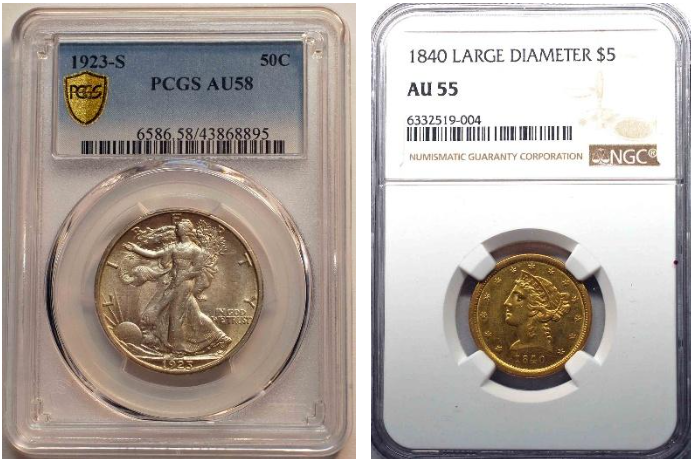
Professional Coin Grading Service
Numismatic Guaranty Corporation
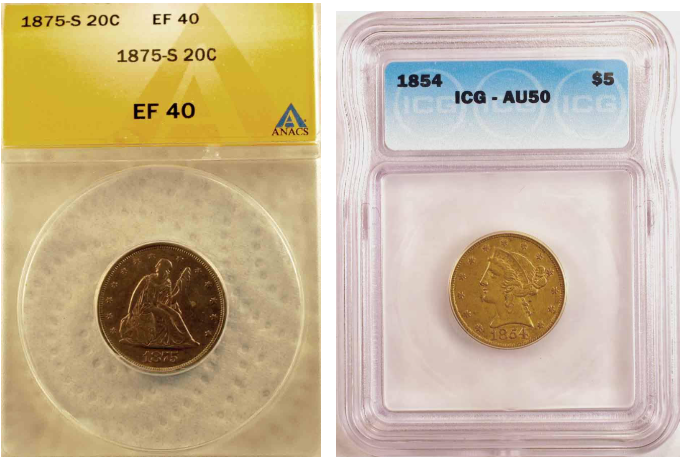
American Numismatic Association Certification Service
Independent Coin Grading Service
There are many advantages to purchasing coins in TPG holders:
1) Authenticity. The Big Four graders all offer an authenticity guarantee for coins they have slabbed. Basically, if they make a mistake and encapsulate a counterfeit coin which ends up in your collection, they will either replace it or pay you the “fair market value” for an authentic piece in the same grade. This is an important feature for coins that are widely counterfeited, such as Trade dollars, three-dollar gold pieces, and key dates from almost any series. Unless you are confident in your ability to recognize counterfeits it makes sense to choose coins with a built-in guarantee.
2) Condition and Price. The TPG assigns a numeric grade to the coins they slab. The TPG grade is an independent opinion about the condition of the coin, and is theoretically unbiased towards buyer or seller. Checking sales history for the coin/grade combination tells you what a slabbed coin should cost. This is very useful information to have when bargaining with a dealer. PCGS and NGC also provide price guides on their websites. These purport to show current retail prices for graded coins in their holders, giving you one more indicator for valuation of certified coins.
3) Originality. Original coins without “problems” are always preferred. Most collectors have had the experience of buying a “raw” coin that looked OK at the show or on-line only to discover that it had been cleaned or has other problems. TPG-slabbed coins protect you since their labels will state such problems on the label. They don’t catch everything but your chance of getting a problem-free coin is improved when a grading service determines the coin is original.
4) Resale. When the time comes to sell a coin it will be easier to find a buyer if the coin is certified by a Big Four TPG. Buyers are more comfortable paying top dollar for a coin in a TPG holder. If you sell in an auction there will likely be more competitive bidding for a certified coin, resulting in a higher price.
5) Documentation. Many collections pass down to heirs who have little knowledge or interest in numismatics. Having coins already slabbed provides positive identification. This will help ensure that heirs get fair value if they decide to sell Grandpa’s coins. Slabs have unique serial numbers which assist in recovery if coins are lost or stolen. Every collector should maintain a list of their valuable slabbed coins, with serial numbers, and make sure their family members have access to that list should it ever become necessary to confirm an inventory, or to track down missing items.
6) Protection. Slabs provide significant protection for valuable coins. They are not airtight or fireproof but they prevent damage from careless handling. Many valuable coins are ruined when non-collectors decide to “shine them up” before bringing them into the coin shop; that won’t happen if the coins are sealed in the tamper-resistant TPG slabs.
If you own “raw” (uncertified) coins of significant value, especially coins that are commonly counterfeited, it might be worth investing the fees to have them graded by a reputable TPG. Grading companies ANACS and ICG currently (as of July, 2026) do not require memberships and private collectors can submit coins for grading. In order to have coins graded by PCGS and NGC you will need to pay for a membership which provides grading privileges. Another option with these TPGs is to locate a coin dealer with submission privileges who, for a fee, will get the coins graded on your behalf. Major coin shows offer another grading opportunity, since the TPGs attend at least some of these shows and can accept coins directly from the public. If you ship coins out for grading, always make sure they are fully insured and well-documented. It’s a good idea to have quality photographs of your coins for your records. USPS Registered mail is usually the most secure choice for shipping valuable items like collector coins.
Of course, TPGs aren’t perfect. I’ve had the experience of buying a coin in a TPG holder thinking it was perhaps undergraded. Hoping I’d scored a great bargain I then cracked out the coin and sent it to another grading service for a potentially higher grade. The coin however was determined to have been cleaned and was returned in a new holder with “cleaned” noted on the label. Either the first TPG had failed to notice the cleaning issue and slabbed the coin as problem-free, or the second TPG made a bad call and found a defect where none existed. It’s important to recognize that TPGs provide expert, informed opinions about each coin, but they are still just opinions. Every collector should strive to improve their own grading skills and continue to form personal objective opinions about each potential coin purchase. Take the TPG opinion into consideration, but always exercise your own judgment.
In short, TPGs provide a valuable service to the collecting community which has become increasingly important over time. If you are interested in having your coins graded, keep in mind that the cost can be significant. Basic certification for lower-value coins is typically priced in the range of $20-$50, per coin. TPGs have tiered pricing so you will need to pay more for very valuable pieces. You can pay an additional premium for faster turnaround. For each coin, only the collector can determine whether certification will be worthwhile.